All of us, as complete human beings, capable of understanding ourselves, of defining our own identity through the adoption of rich human languages of expression—but also through the language of art, of gestures, of love—we build our entire world through the genesis of the mind, which is dialogical, constructed in relation to the “significant others,” as George Herbert Mead describes.
Now, as we define our uniqueness, what importance does our difference hold in relation to others? Is it truly significant that someone might have exactly 3,576 hairs on their head, or the same height as a tree on the Siberian plain, or that they are the best violinist in the country, or have long legs and plump lips—do these things really define the uniqueness of a person, of a human being at all?
It is absurd to believe that the most meaningful act of self-definition is the wiggling of one’s toes in soft sand.
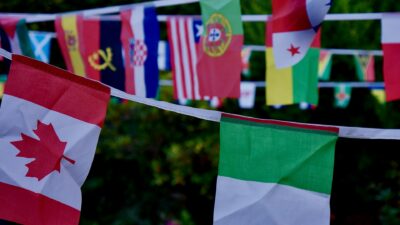
What truly matters is that things have a framework of meaning—and accordingly, that there is clarity and acceptance of difference, of multiculturalism and interculturalism, and equal value for every human being in choosing and voicing what meaning is.
As Charles Taylor writes in The Malaise of Modernity:
“…when you set out on the path to maturity, you cannot carry everything with you. You distance yourself. You move away from other people and institutions, you abandon assigned roles and draw nearer to yourself. And if I could give a gift to everyone who embarks on that path, I would give them a tent.
It is a gift with roots that can be passed on… before each of us lies the opportunity to return reborn from that journey and to love again, because those we love may come and go, but the ability to love again remains within us.”
In the end, the choice lies with the individual.