In times of upheaval and alienation of the human being from their essence, there is a constant search for meaning and stability within the realms of creativity. René Descartes once said, “I think, therefore I am.” The kingdom of thought is a kingdom of freedom—or in my case, the kingdom of words is a realm of endless creation and absolute liberty.
I must agree with Umberto Eco and his views on the work of art in the era of communication, namely that every artistic piece is open to us and subject to an infinite number of interpretations and readings, depending on the knowledge of the recipient. In fact, every text is a pretext or intertext of another text, whose sources cannot truly be traced. But from that arises a dissemination (as Derrida would say)—a moving force of the text, an unstable and living source of countless meanings, an explosion. A book is not a finished product, but a text that leaves space for a million creative thoughts and interpretations.
Such creative infinity of interpretation is also granted by every form of poetry, which seems to overflow into all known and unknown texts throughout the historical construction of worldliness. Yet, no matter how infinite these interpretations may be, in Schiller’s eyes, art remains the field of aesthetic utopia—the most harmonious and ideal place for mutual human understanding.
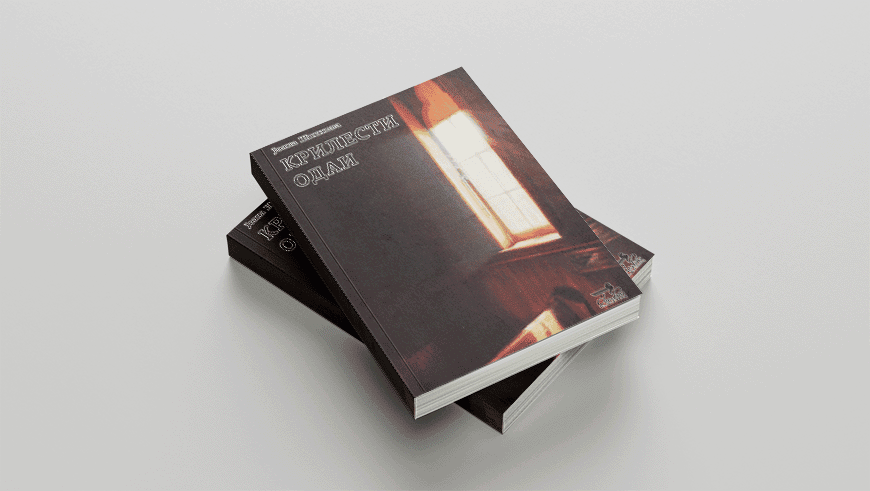
This second poetry book presents a theme connected to the personal journey of a human soul, and all the stages of spiritual maturation of the individual who is socially conditioned by the rules and norms of the acceptable behavior of the Other. I deeply believe—in a Freudian sense—that this implies the breaking of rules and norms of a prison-like life, and finally reaching a free perception of truth.
It is composed of three chapters—parts that correspond to Hell, Purgatory, and Paradise, in a Dantean sense. For as long as we remain wrapped in the Earth’s crust, we will inevitably seek the unimaginable light of God’s creation.
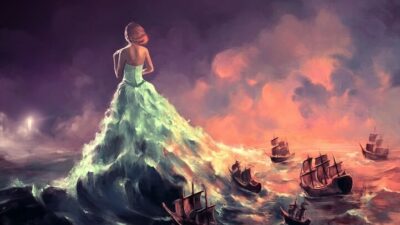
Beginning from the earthly chaos, the first part, The Fall of the City, unfolds before the eyes of the inhabitant: a cosmopolitan contamination of the essence of things. Perhaps in this part, I best portray the Lacrimary—a small bottle filled with love, tears, pain, a message with a thousand poetic meanings.
The second phase is a reconciliation of passions—a catharsis of aesthetic purification of the spirit, which, as a prerequisite, leads us to the gates of the Winged Chambers, where all and EVERYTHING resides. This is the warm room of light where the soul enjoys the blessings of well-earned peace. A thematic whole that gently guides us through the states of poetic substance absorbed through the spiritual eyes of a personal struggle for moral survival.
The variation in the tone and texture of expression depends on the phase in which the reading dwells—from raw intensity, through calm reflection, to the joyful return of spiritual vitality and the meaning of existence. It is a final understanding of Sisyphus’s torment in the shifting of the stone—and the victory of Life over Death and the Underworld.