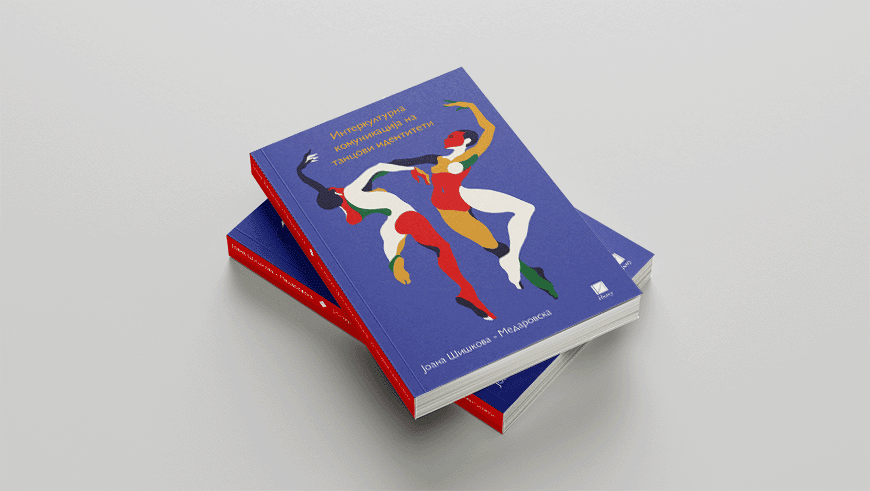
Intercultural Communication of Dance Identities is a fertile theoretical research that encompasses segments related to the clarification of the “universality” of dance communication, as well as the intercultural flows of hybrid stage performance. It begins with themes such as beauty and art, aesthetics, dance as a non-verbal and bodily expression, the non-verbal language of the body, and extends to intercultural forms of new dance communication.
The theoretical part applies discourse analysis within various theoretical paradigms, drawing upon literature from different disciplines and fields, including: cultural theory, sociology of culture, performance aesthetics, basics of stage performance, semiotics, history of ballet art, aesthetics of movement, theatre anthropology, theatre studies, intercultural theatre, intercultural communication, and international performance.
The goal of this book is to present the impact of the universal recognizability of the dance alphabet as a medium for intercultural communication across various cultural and national contexts. The “universal language” of dance—composed of signs, symbols, gestures, and movements—effectively reflects the non-verbal communication of different cultures. In this way, dance is treated as a universal means of communication on the global stage, capable of transcending stereotypes and ethnocentrism.
In addition to the theoretical discourse analysis and literature review across diverse academic fields, the research also includes interviews with Macedonian ballet artists, costume and set designers, ballet pedagogues, theatre scholars, professors of ballet art, conductors, directors, modern dancers and choreographers, ballet critics, cultural managers, and ballet masters and contemporary dance choreographers. Content analysis was also conducted on ballet documentaries and documented dance works performed by major names in classical and contemporary ballet art.
This scholarly work represents an interesting and creative journey into the world of dance, from the earliest forms of dance expression to contemporary currents in postmodern performance. The globalized stage of dance creation is presented through the styles and performances of various world-renowned choreographers who have marked the international flow of this performing art.
The structure and text of the book are accessible and easy to read for all lovers of dance, as well as for those without deep knowledge in the field, making it broadly engaging and available to the general public.
The justification for publishing such a work lies in the need to actively integrate this performing art into our everyday lives—to learn to respect and nurture it, as it reflects our very existence and spiritual uniqueness.
This truth is beautifully captured in the words of the great ballet reformer Jean-Georges Noverre, who wrote in 1670: “Painting and dance have the advantage over other arts—they belong to all countries and all peoples. Their language is the language of the entire world, and their acceptance is the same everywhere.”