Skopje, the capital of North Macedonia, is a city shaped by time. Its history stretches back over two millennia, built upon layers of empires, religions, destruction, and rebirth. Among its many historical treasures, two stand as quiet witnesses to the city’s enduring spirit: the Skopje Fortress—known as Kale—and the centuries-old churches scattered across its hills and valleys.

Old pictures of Skopje, 1934

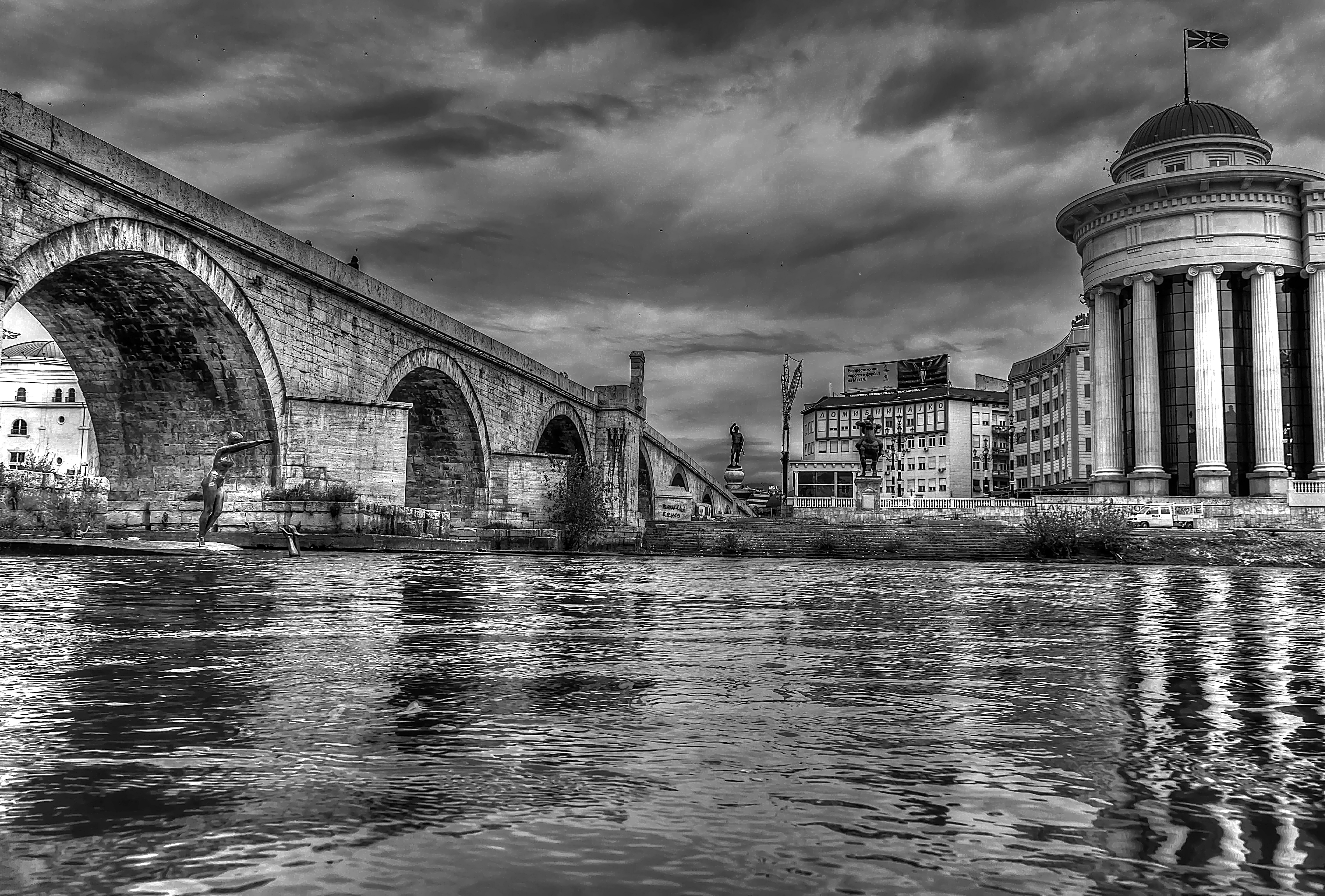
Skopje Fortress (Kale) – The Guardian of the City

Perched above the Vardar River, the Skopje Fortress has watched over the city since the 6th century, though archaeological findings suggest the hill was inhabited even earlier—possibly in Neolithic times. The current stone walls date back to the Byzantine era under Emperor Justinian I, who was born not far from here.
Kale, as locals call it, has seen countless changes: Roman legions, Ottoman sultans, Yugoslav soldiers. Its stones have survived earthquakes, fires, and wars. But despite centuries of turmoil, the fortress still stands—silent, stoic, and symbolic. From its walls, one can see the entire city below: old and new Skopje woven together in one dramatic panorama.
The Sacred Stones – Skopje’s Old Churches
While the fortress protected the body of the city, the old churches nourished its soul. Hidden between hills, gardens, and quiet neighborhoods, these churches speak of faith, art, and the resilience of the Macedonian Orthodox tradition.

Church of the Holy Savior (Sveti Spas)

Church of the Holy Savior (Sveti Spas)
One of the oldest and most significant is the Church of the Holy Savior (Sveti Spas), located just beneath Kale. Modest on the outside but breathtaking within, its 19th-century wooden iconostasis is a masterpiece of deep, intricate carving—one of the finest in the Balkans.

St. Pantelejmon in Gorno Nerezi
Further afield lies St. Pantelejmon in Gorno Nerezi, built in 1164. This church is home to stunning frescoes that predate the Renaissance, expressing deep emotion and fluid movement—centuries before similar styles appeared in Western Europe. Many art historians consider them revolutionary.

St. Andrew in Matka Canyon
Other churches like St. Demetrius, St. Nikita, and St. Andrew in Matka Canyon also tell stories—of noble families, monastic life, and quiet devotion. They survived Ottoman rule, neglect, and nature, yet remain deeply spiritual places, rich with incense, icon light, and whispered prayers.
A Living Legacy
Skopje is often seen as a city of contrasts—between the modern skyline and the ancient stone, between secular life and spiritual tradition. But these contrasts are not contradictions—they are layers of the same story.
To walk through Skopje’s fortress and its old churches is to feel the pulse of the city not only through centuries, but through the very stones beneath your feet. These are places where history is not just remembered—it is lived, every day.

Church of the Holy Savior (Sveti Spas)