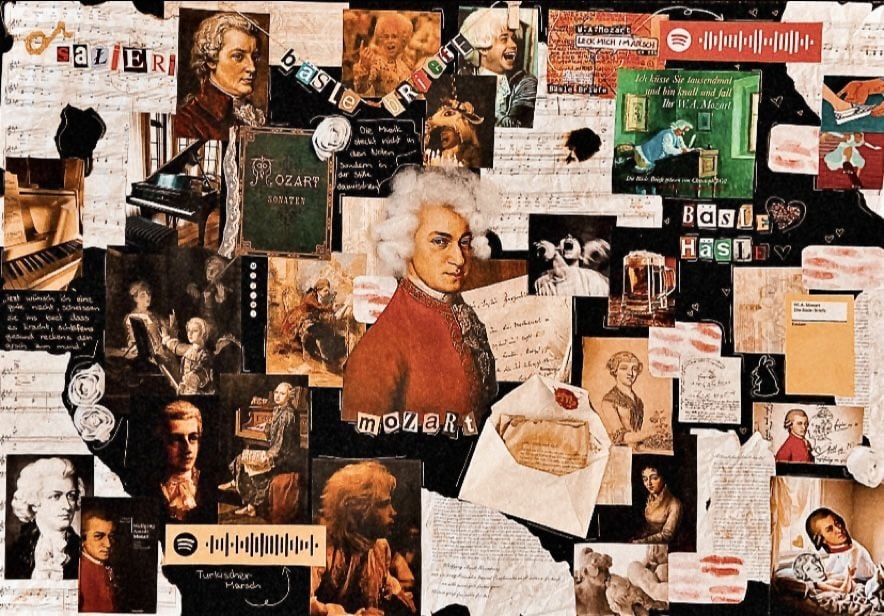
Do each of us, to a greater or lesser extent, carry Salieri within the code of our behavior — at the core of our dual nature? Do we, day by day, condemn Mozart in others, in the mirror of our own existence?
We use the medium of communication in the same deceitful way, twisting the benefits of linguistic distinctiveness and privilege into a classical variation of suspicion. A poor form of existence cloaked in a theatrical vocabulary and rehearsed études.
Blind envy has its own survival mechanisms — a generational line of the same furious values: destruction and rage upon the stage of life.
Always hungry, always thirsty.
Our boiled-down form, confined within physical dimensions, enjoys the comfort of conformism — seeking a larger portion of recognition. Much like Salieri’s mental prison, we silently sketch the immortal outlines of fame.
Fame, whose shadow — even after death — was buried on the margins of eternal cold and darkness.
And so the truth remains: Salieri, the hidden artist, lost within the eternal illuminations of Mozart’s musical manuscripts — because once truth becomes aware of its origin, it demands the individual to acknowledge it and to elevate the interest of humanity.
His works adorned the summit of world artistic history — before and after Mozart. Temptations launched his imagination into a priceless legacy.
Yet the theft of one’s personal good continues even today, desecrating the soul of the marked one — whoever they may be in the time of creation.
Salieri, on the other hand, became a synonym for daily quarrels and petty manipulations — attempts to crown empty humanity.
He is our hunger for greatness and eternal glory.
But marble is not revered for its coldness, but for its resilience — for its power to preserve the bones of greedy, famished men.